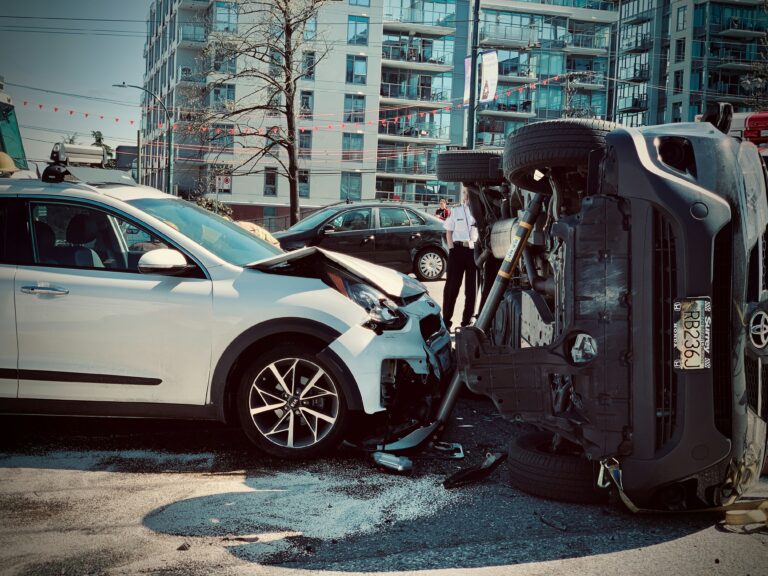

After a crash, one of the first questions people ask is whether their own insurance pays or the other driver’s. The answer depends on whether a state is “at-fault” or “no-fault.” Georgia is an at-fault state, and that single fact shapes who pays, how much, and why the insurance company works so hard to put some of the blame on you.
The short answer: Georgia is an at-fault (tort) state, not a no-fault state. The driver who caused the crash, through their liability insurance, is responsible for the injuries and damage they caused. Georgia also uses modified comparative fault: you can recover as long as you are less than 50% at fault, but your award is reduced by your share of the blame (O.C.G.A. § 51-12-33). At 50% or more, you recover nothing.
Key Takeaways
- Georgia is an at-fault state. The at-fault driver’s liability insurer pays your injury claim, and Georgia does not require personal injury protection (PIP) coverage.
- Georgia drivers must carry at least $25,000 per person, $50,000 per accident and $25,000 in property damage liability coverage.
- Your recovery is reduced by your percentage of fault, and you recover nothing if you are 50% or more at fault.
- No single document decides fault. The police report, traffic violations, photos, video, witnesses and vehicle data all matter.
- Most Georgia injury claims must be filed within two years of the crash (O.C.G.A. § 9-3-33).
At-Fault vs. No-Fault: What’s the Difference?
In a no-fault state, your own personal injury protection (PIP) coverage pays your medical bills first, no matter who caused the crash, and you can only sue the other driver for pain and suffering if your injuries meet a threshold. Florida, Michigan, and New York are examples. Georgia works differently.
| Georgia (at-fault) | No-fault states | |
|---|---|---|
| Who pays your injury claim | The at-fault driver’s liability insurer | Your own PIP coverage first |
| Pain and suffering | Recoverable from the at-fault driver | Only if the injury meets a legal threshold |
| Required coverage | Liability of at least $25,000 per person, $50,000 per accident, $25,000 property damage | PIP plus liability |
| How much fault matters | Everything: fault decides who pays and how much | Less, until a lawsuit is allowed |
Georgia’s 50% Rule, in Real Numbers
Georgia’s comparative fault statute, O.C.G.A. § 51-12-33, lets a jury assign a percentage of fault to each person involved. Your damages are reduced by your percentage, and if you are 50% or more at fault, you are barred from recovering at all. Here is how that plays out on a $100,000 claim:
| Your share of fault | What you can recover |
|---|---|
| 0% | $100,000 |
| 20% | $80,000 |
| 49% | $51,000 |
| 50% or more | $0 |
That cliff at 50% is why adjusters look so hard for anything that shifts blame to you: a “sudden stop,” a lane change, a few miles over the limit, or a phone in the cupholder. Every point of fault assigned to you lowers what you can recover.
How Fault Is Decided After a Georgia Crash
No single document decides fault. Insurance adjusters make the first call, and if the claim can’t be settled, a judge or jury decides it based on the evidence:
- The police report. Important, but not the final word. Officers often arrive after the crash and rely on what drivers tell them. You can ask the agency to correct factual errors. Our guide to Georgia crash report codes explains how to read one.
- Traffic law violations. Following too closely (O.C.G.A. § 40-6-49), failing to yield, running a light, or using a phone in violation of Georgia’s hands-free law (O.C.G.A. § 40-6-241) are strong evidence of negligence.
- Photos, video, and vehicle damage. Damage patterns show angles and impact points. Dash-cam, doorbell, and business cameras often settle disputes, but footage is often overwritten within days.
- Witnesses. Neutral witnesses carry weight with adjusters and juries.
- Vehicle data. Many cars record speed and braking in the seconds before impact.
- Seat belt use. Under Georgia’s 2025 tort reform law (SB 68), evidence that you weren’t wearing a seat belt may now be considered on fault and causation and may reduce a recovery (O.C.G.A. § 40-8-76.1), subject to the rules of evidence.
Whose Insurance Pays in an At-Fault State?
- The at-fault driver’s bodily injury liability coverage pays your medical bills, lost wages, and pain and suffering, up to its limits.
- Your uninsured/underinsured motorist (UM) coverage steps in when the at-fault driver has no insurance, too little, or flees the scene. See our uninsured motorist claims page.
- Your collision coverage can fix your car quickly; your insurer may then seek repayment from the at-fault driver’s insurer.
- MedPay, if you bought it, pays medical bills regardless of fault, up to a small limit.
Because Georgia’s minimum liability limits are low, serious injuries often exceed the at-fault driver’s policy. Finding every layer of coverage early is one of the most valuable things a lawyer does.
What If You Were Partly at Fault?
You can still recover if you were less than 50% responsible. Don’t guess about fault at the scene or on a recorded call. Saying “I didn’t see them” or “I might have been going a little fast” can be used to push your percentage up. Common shared-fault situations include rear-end crashes where insurers claim a sudden stop, lane-change crashes, and multi-vehicle pileups. When more than one driver is to blame, Georgia assigns each a percentage of fault, and each at-fault driver’s insurer pays its share.
What to Do After a Crash in an At-Fault State
- Call 911 and report the crash. Georgia requires reporting crashes with injury, death, or $500 or more in damage (O.C.G.A. § 40-6-273).
- Photograph the vehicles, the road, signals, and skid marks before anything moves, if it’s safe.
- Get names and numbers from witnesses and ask nearby businesses to save their video.
- Get checked by a doctor the same day, even if you feel fine.
- Report the crash to your own insurer, but don’t give a recorded statement to the other driver’s insurer yet.
- Talk to a lawyer before you accept any offer or sign a release.
Most Georgia injury claims must be filed within two years (O.C.G.A. § 9-3-33); our guide to Georgia personal injury deadlines explains the exceptions. Our Georgia car accident lawyers can start building the fault case early, while the evidence is still available.
Frequently Asked Questions
Is Georgia a No-Fault State?
No. Georgia is an at-fault state. The driver who caused the crash, through their liability insurance, pays for the injuries and damage they caused. Georgia does not require personal injury protection (PIP) coverage.
What Happens If I Am 50% at Fault in Georgia?
Under O.C.G.A. § 51-12-33, a person who is 50% or more at fault cannot recover damages. If you are less than 50% at fault, your recovery is reduced by your percentage of fault.
Does the Police Report Decide Who Was at Fault?
No. The police report is important evidence, but insurers and, if needed, a jury decide fault based on all of the evidence, including photos, video, witnesses, and vehicle damage.
Should I Use My Own Insurance After a Crash in Georgia?
You can. Collision coverage can repair your car faster, MedPay can help with early medical bills, and uninsured motorist coverage applies if the other driver has no insurance or too little. Your insurer may then seek repayment from the at-fault driver.
If you were hurt in a Georgia crash and fault is in dispute, schedule a free, no-obligation consultation with The Gunn Law Group. There is no fee unless we recover for you, and hablamos español. Call 888-BIG-GUNN (888-244-4866) or request a free case review online.