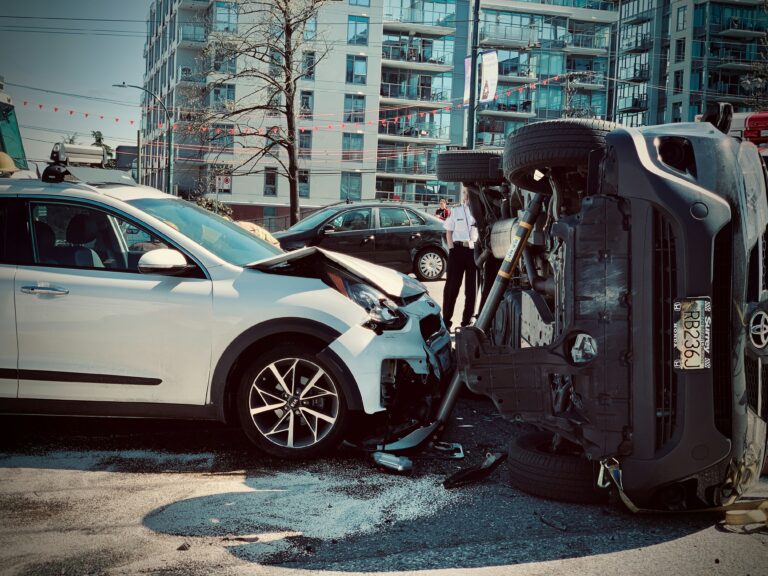

Road rage can turn an ordinary drive into something dangerous in seconds: a driver tailgates you, cuts you off, brake-checks you or swerves into your lane on purpose. If you were hurt by an enraged or aggressive driver in Georgia, you generally have the right to seek compensation from that driver for your medical bills, lost income and pain and suffering, just as you would after any crash someone else caused.
These claims have wrinkles ordinary crash claims don’t: the other driver may face criminal charges, their insurer may argue an intentional act isn’t covered, and the adjuster may blame you for “starting it.” Here is how they work under Georgia law.
Key Takeaways
- Georgia makes aggressive driving a crime: operating a vehicle with the intent to annoy, harass, intimidate, injure or obstruct another person is a misdemeanor of a high and aggravated nature (O.C.G.A. § 40-6-397).
- A criminal case against the other driver is separate from your civil injury claim, and you don’t need a conviction to pursue damages.
- If the driver’s insurer legally denies coverage, for example because the harm was intentional, your own uninsured motorist (UM) coverage may pay.
- Punitive damages may be available for willful or intentional conduct, and Georgia’s usual $250,000 cap does not apply when a defendant acted with specific intent to cause harm.
- Most Georgia injury claims must be filed within two years, and insurers may try to shift blame to you under the 50% comparative fault rule.
What Counts as Road Rage Under Georgia Law?
“Road rage” isn’t a term Georgia’s traffic code uses, but the behavior behind it is covered. Georgia’s aggressive driving statute, O.C.G.A. § 40-6-397, makes it a crime to operate a vehicle “with the intent to annoy, harass, molest, intimidate, injure, or obstruct another person.” The statute lists traffic violations that count when done with that intent, including unsafe passing, improper lane use, following too closely, turning without signaling, impeding traffic and reckless driving.
Deliberately ramming a car or striking someone with a vehicle can lead to more serious charges, such as aggravated assault.
For your injury claim, the facts matter more than the label. An angry driver who was careless or reckless may be liable for negligence; one who meant to cause harm may also be liable for an intentional act, which can open the door to punitive damages.
Common Road Rage Injuries
Road rage crashes often involve speed, sudden braking or deliberate contact. Common injuries include:
- Whiplash and neck and back injuries from rear-end impacts and brake-checking
- Head injuries and traumatic brain injuries
- Spinal cord injuries, including paralysis in severe crashes
- Broken bones and fractures
- Internal bleeding and organ damage
- Facial injuries and scarring
- Anxiety, fear of driving and other emotional harm after a frightening confrontation
Passengers, motorcyclists, cyclists and pedestrians hurt by an aggressive driver may have claims too, not just the driver who was targeted.
Criminal Charges vs. Your Civil Injury Claim
A road rage incident can lead to two separate cases, and the outcome of one doesn’t control the other.
| Criminal case | Civil injury claim | |
|---|---|---|
| Who brings it | The State of Georgia | You, the injured person |
| Burden of proof | Beyond a reasonable doubt | More likely than not |
| What it can lead to | Fines, probation or jail | Money damages for your losses |
You don’t need a conviction to recover damages. An arrest, a citation or a police report describing the other driver’s behavior can be useful evidence, but your claim stands on its own.
Georgia law can pause the deadline for a crime victim’s injury claim while the criminal prosecution is pending, for up to six years (O.C.G.A. § 9-3-99). That rule has limits, and many cases are resolved quickly, so don’t count on it. Our guide to Georgia personal injury deadlines explains the two-year rule and its exceptions.
Whose Insurance Pays After a Road Rage Crash?
Georgia is an at-fault state, so the driver who caused the crash is responsible. Road rage can complicate where the money comes from:
- The aggressive driver’s liability insurance. Georgia requires at least $25,000 per person, $50,000 per accident and $25,000 in property damage coverage. When a driver was careless or reckless rather than trying to hurt anyone, liability coverage generally applies as it would in any crash.
- Intentional-act exclusions. Many auto policies exclude injuries the policyholder caused on purpose, so if the driver deliberately hit you, their insurer may deny coverage. Whether an exclusion applies depends on the policy wording and facts.
- Your uninsured motorist coverage. Georgia’s UM statute treats a vehicle as uninsured when its liability insurer “has legally denied coverage” (O.C.G.A. § 33-7-11(b)(1)(D)(iii)). UM coverage may also apply if the driver had too little insurance or sped off. Hit-and-run UM claims have extra requirements, including physical contact or an independent eyewitness. Our guide to Georgia UM coverage explains how these claims work.
- MedPay and collision coverage. If you carry them, they help with early medical bills and repairs regardless of fault.
Damages You May Be Able to Recover
Depending on the facts, a road rage injury claim may include:
- Medical expenses, past and future. For claims arising on or after April 21, 2025, Georgia’s tort reform law (SB 68) changed how medical expenses are proven, and evidence of what was actually paid may be considered (O.C.G.A. § 51-12-1.1).
- Lost wages and loss of future earning capacity.
- Pain and suffering, including emotional distress. Our guide to Georgia pain and suffering explains how these damages are valued.
- Property damage to your vehicle. Property damage claims generally have a four-year deadline (O.C.G.A. § 9-3-31).
- Punitive damages. Under O.C.G.A. § 51-12-5.1, punitive damages require clear and convincing evidence of willful misconduct, malice, wantonness or conscious indifference to consequences. They are generally capped at $250,000, but the cap does not apply when the defendant acted with specific intent to cause harm or was impaired by alcohol or drugs.
When the Insurer Says You Provoked It
Adjusters may argue that both drivers were angry, pointing to honking, gestures, blocking, brake-checking or following the other driver.
This matters because of Georgia’s modified comparative fault rule (O.C.G.A. § 51-12-33). Your recovery is reduced by your percentage of fault, and if you are found 50% or more at fault, you recover nothing. After SB 68, evidence that you weren’t wearing a seat belt may also be considered on fault and causation (O.C.G.A. § 40-8-76.1).
Don’t give the other driver’s insurer a recorded statement before talking to a lawyer. A remark like “I was pretty angry too” can be used to push your share of fault up.
What to Do After a Road Rage Incident
- Don’t engage. Avoid eye contact, gestures and pulling over to confront the other driver. If you are being followed, drive to a police station or a busy, well-lit public place and call 911.
- Call 911 and report it. Georgia requires reporting crashes with injury, death or apparent property damage of $500 or more (O.C.G.A. § 40-6-273). A report also documents the other driver’s behavior.
- Capture details. Note the plate, vehicle, driver and direction of travel. Save dash-cam footage and get witness names and nearby business video.
- Get medical care. See a doctor the same day, even if you feel fine.
- Stay off social media. Posts about the incident or your injuries can be used against you.
- Talk to a lawyer before accepting any offer. Our Georgia car accident lawyers can review the insurance picture and help preserve evidence.
Frequently Asked Questions
Can I Sue a Road Rage Driver in Georgia?
Yes. If another driver’s aggressive or intentional conduct caused your injuries, you can generally bring a civil claim for your medical bills, lost income, pain and suffering and other losses. Punitive damages may also be available in some cases.
Do I Need a Criminal Conviction to Win a Road Rage Injury Claim?
No. The criminal case and your civil claim are separate, and the civil claim uses a lower standard of proof. Charges or a police report can support your claim, but you don’t need a conviction.
What If the Road Rage Driver’s Insurance Denies My Claim?
An insurer may deny coverage if it says the driver hurt you on purpose. Georgia treats a vehicle whose insurer has legally denied coverage as uninsured, so your own UM coverage may apply. A lawyer can review both policies and the denial.
How Long Do I Have to File a Road Rage Injury Claim in Georgia?
Most Georgia personal injury claims must be filed within two years of the injury (O.C.G.A. § 9-3-33), and property damage claims generally within four years. A pending criminal case may pause the deadline in some situations, but you shouldn’t rely on that without legal advice.
If you were hurt by an aggressive or road rage driver in Georgia, schedule a free, no-obligation consultation with The Gunn Law Group. There is no fee unless we recover for you, and hablamos español. Call 888-BIG-GUNN (888-244-4866) or request a free case review online.