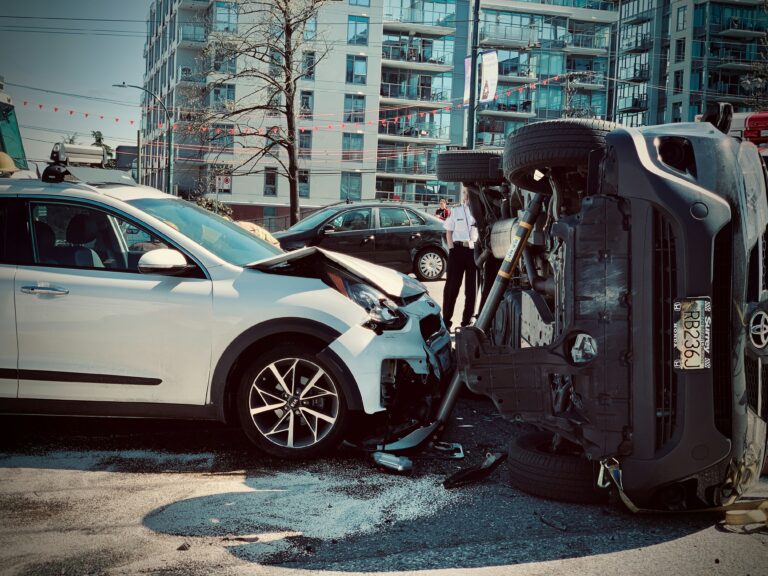

Summer brings beautiful weather and busy roads across Georgia, along with more chances for a driver to look away at the wrong moment. Road trips, holiday weekends and phones used for directions, music and messages all pull attention from the road. If a distracted driver hit you, you may be able to recover your medical bills, lost wages and other losses, and Georgia’s hands-free law can be an important part of proving fault.
Here’s what counts as distracted driving, what Georgia law prohibits, what to do after a crash and how to protect your rights.
Key Takeaways
- Georgia’s hands-free law bars drivers from holding or supporting a phone and from reading or sending texts while driving (O.C.G.A. § 40-6-241).
- Distraction includes anything that takes a driver’s eyes, hands or mind off the road, not just texting.
- Evidence of distraction can include phone records, witness statements, video and the driver’s own statements.
- Georgia’s modified comparative fault rule reduces recovery by your share of fault and bars it at 50% or more.
- Most Georgia injury claims must be filed within two years (O.C.G.A. § 9-3-33).
Why Distracted Driving Gets Worse in Summer
- Road trips and vacations mean more drivers using phones for directions and playlists
- Passengers, kids and pets can take a driver’s focus off the road
- Holiday weekends, including the Fourth of July, bring heavy traffic and long drives, which increase the temptation to multitask
- Unfamiliar routes lead drivers to glance at maps and screens more often
Common Types of Distracted Driving
- Texting, calling or checking notifications on a phone
- Eating, drinking or adjusting music controls
- Talking with passengers or tending to children
- Using in-car navigation or entertainment screens
- Reaching for objects in the back seat
Even a split second of inattention at highway speed can cause a crash, and rear-end collisions are among the most common results. Learn why rear-end crashes are often worth more than insurers suggest.
What Georgia’s Hands-Free Law Prohibits
Under the Hands-Free Georgia Act, O.C.G.A. § 40-6-241, a driver may not:
- Physically hold or support a phone or stand-alone electronic device with any part of the body
- Write, send or read texts, emails, instant messages or other internet data
- Watch a video or movie, other than navigation data
- Record or broadcast video, except with a device used only to record continuously, such as a dash camera
Drivers may still use voice calls through an earpiece, headphones or a wrist-worn device, use navigation, report an emergency and use a phone while lawfully parked. Commercial truck drivers face even stricter rules. Fines start at up to $50 for a first offense and increase for repeat violations.
A citation for violating the hands-free law can be strong evidence of negligence, but you can still prove distraction without one.
How Distraction Is Proven
Drivers rarely admit they were on their phone. Evidence may include:
- Phone records showing calls, texts or data use at the time of the crash, usually obtained through the legal process
- Witness statements from passengers, pedestrians or other drivers who saw the driver looking down
- Video from traffic cameras, dash cameras, businesses and doorbells
- Crash data, such as the lack of braking before impact
- The police report, which may note distraction or a citation. Our guide to Georgia crash report codes explains how to read it.
Because video is often recorded over within days, acting quickly helps.
What to Do After a Distracted Driving Crash
- Check for injuries and call 911. Your health comes first, and the crash should be reported.
- Document the scene. Photograph the vehicles, damage, the other driver and anything that suggests distraction, such as a phone in hand or spilled food.
- Get witness information. Passengers, pedestrians or other drivers may have seen the distraction.
- Request the police report. Tell the officer if you saw the driver using a phone.
- Seek medical attention. Some injuries become worse hours after a crash.
- Be careful with insurance. Report the crash, but don’t admit fault or accept a settlement before getting legal advice.
- Talk with a personal injury attorney. A lawyer can send preservation letters and request records.
What Compensation Can You Recover
When another driver’s negligence caused the crash, you may be able to recover:
- Medical bills and future care costs
- Lost wages or reduced earning ability
- Pain and suffering, including emotional distress
- Car repairs or replacement
Georgia uses modified comparative fault (O.C.G.A. § 51-12-33). Adjusters may argue that both drivers were distracted, so evidence gathered early matters. Learn more about our car accident practice.
Frequently Asked Questions
Is It Illegal to Use a Phone While Driving in Georgia?
It is illegal to hold or support a phone, or to read or send texts, while driving in Georgia. Hands-free voice calls and navigation are allowed. Commercial drivers face stricter limits.
How Can I Prove the Other Driver Was on Their Phone?
Phone records, witness statements, video and crash data can all help. Phone records usually must be requested through the legal process, and they are most useful when matched to the exact time of the crash. Tell the police officer at the scene if you saw phone use.
What If the Driver Wasn’t Ticketed?
You can still bring a claim. A ticket is helpful evidence, but the question in a civil case is whether the driver failed to use reasonable care. Other evidence can show distraction without a citation.
How Long Do I Have to File a Claim After a Distracted Driving Crash?
Most Georgia personal injury claims must be filed within two years of the crash, and property damage claims within four years. See our guide to Georgia personal injury deadlines.
If you were hurt because another driver wasn’t paying attention, don’t settle before you understand your options. The Gunn Law Group offers a free, no-obligation consultation, and you pay no attorney fee unless we recover for you. Call 888-BIG-GUNN (888-244-4866).