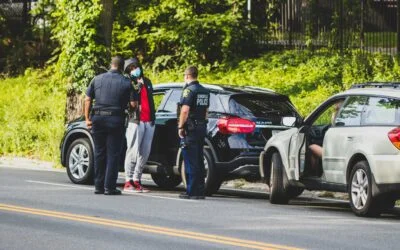

If you were injured in a Georgia car accident, you probably assume the police report will automatically help you. Sometimes it does. But sometimes the report contains errors, missing details, or an opinion that the insurance company uses to reduce or deny your claim. A police report is important evidence, but it is not the final word on what happened. What matters is how the report fits into the full proof of liability, injuries, and damages.
What this means in real life
Police officers often arrive after the crash. They may not witness the collision, and they have limited time to gather facts at a chaotic scene. Reports can include incorrect lane descriptions, wrong intersection details, incomplete witness information, or a statement that makes it sound like you admitted fault when you did not. Once the insurance company sees something they like in a report, they will hold onto it and build their arguments around it.
Common police report issues that show up in Georgia crash claims
Small mistakes can create big problems.
Wrong direction of travel or lane assignment
Incorrect vehicle positions or point of impact
Missing witness names and phone numbers
No mention of cameras nearby
Incorrect driver statements or misquoted wording
Fault language that sounds definitive even when the officer did not witness the crash
Failure to note injuries at the scene even when pain appeared later
Insurance companies often treat these issues like facts, even when they are just errors.
Why the report matters under Georgia’s 50 percent rule
Georgia follows a modified comparative fault rule. If you are found 50 percent or more responsible, you can be barred from recovering damages. Insurers know this and will look for anything to push blame onto you. A report that hints you were distracted, speeding, or changed lanes can become the basis for a comparative fault argument, even if the true evidence tells a different story.
What to do if the police report is wrong
You usually cannot simply call and “change” a crash report. But you can correct the record through documentation and strategy.
You can request a correction or supplement in certain situations.
You can build stronger evidence that overrides the report’s weaknesses.
You can use medical records, photos, video footage, witnesses, and vehicle damage patterns to prove what really happened.
The goal is not to argue with the report emotionally. The goal is to anchor your case in better proof.
How to strengthen your case when the report is incomplete
A report is only one piece of the puzzle. The more you document early, the less the report controls the outcome.
Steps to take right now to protect your claim
If you are dealing with a recent wreck, these steps help keep the focus where it belongs, on the at fault driver and the real impact on your health.
- Get the report as soon as it is available and read it line by line because small errors can become major leverage for the insurer
- Write down your own timeline immediately including lanes, signals, speeds you are confident about, and where the impact occurred because memory fades quickly
- Collect photos and videos from the scene and vehicles including wide shots of the intersection and close ups of damage because damage patterns can prove lane position and fault
- Track down witnesses listed in the report and any that were missed because neutral statements can correct the story when the report is vague
- Look for camera footage fast because video often resolves disputes the report cannot and it disappears quickly
- Avoid recorded statements that rely on the report because adjusters may push you to agree with errors before you understand them
- Talk to an attorney early so the evidence is preserved, the report is addressed correctly, and the claim is built around proof not paperwork
The bottom line
A police report can help, but it can also hurt when it contains mistakes or missing facts. Strong Georgia car accident cases still win when liability is proven with clear evidence, consistent medical care, and a strategy that prevents the insurer from turning a flawed report into the whole story.
If you have questions about a police report after a Georgia car accident, focus on your health first and let us handle the fight. Need a home run Call the Big Gunn at 888 BIG GUNN.