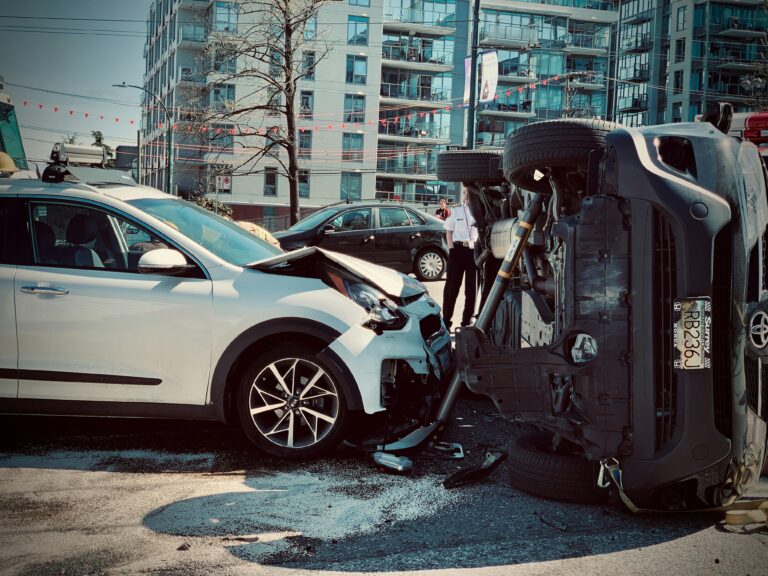
Yes, in Georgia you can usually get paid for diminished value: the drop in your car’s market value because it now has an accident history, even after it has been fully repaired. You can claim it from the at-fault driver’s insurer, and Georgia’s Supreme Court has held that insurers must also assess and pay it under their own customers’ physical damage coverage when it exists.
Insurers rarely bring it up, though. Here is what diminished value is, when it’s worth pursuing, and how to prove it.
Key Takeaways
- Diminished value is the loss in market value a repaired car suffers because of its accident history.
- You can claim it from the at-fault driver’s insurer, and, under State Farm v. Mabry (2001), from your own insurer under physical damage coverage.
- Claims are strongest for newer, lower-mileage cars with significant damage that shows on a vehicle history report.
- An independent appraisal and market evidence usually carry more weight than the insurer’s internal formula.
- Don’t sign a final property damage release until diminished value is paid or clearly preserved.
What Diminished Value Means in Real Life
Say your car was worth $28,000 before the wreck. It is repaired, it looks fine and it drives fine. But it now shows a crash on Carfax or AutoCheck, and the market says it is worth $24,500. That $3,500 difference is diminished value. (These numbers are only an illustration.)
It is not about whether the repairs were good. It is about the discount buyers and dealers apply to any car with an accident history.
Two Ways to Claim Diminished Value in Georgia
- Against the at-fault driver’s insurer (a third-party claim). Georgia law lets you seek any remaining loss in value on top of reasonable repair costs, although the total generally cannot exceed what the car was worth before the crash. This is the most common diminished value claim.
- Against your own insurer (a first-party claim). In State Farm Mutual Automobile Insurance Co. v. Mabry, 274 Ga. 498 (2001), the Supreme Court of Georgia held that an insurer paying for physical damage must assess and pay diminished value when it exists. Your policy language still matters.
The glossary defines diminished value and other claim terms.
When Diminished Value Claims Are Strongest
- The other driver was at fault
- The car is newer, has lower mileage, or is a model buyers are picky about (luxury cars are often hit hard)
- The damage was significant, especially frame or structural damage, airbag deployment or major panel replacement
- The crash shows on a vehicle history report
- The car was repaired, not declared a total loss
Very old cars, high-mileage cars and cars with earlier damage usually have less to claim. If your car was totaled, you’re paid its pre-crash value instead, and the fight is over that number.
Why Insurers Push Back on Diminished Value
Adjusters may:
- Never mention it
- Say the repairs restored full value
- Offer a small number from an internal formula (one widely used approach, often called “17c,” tends to produce lower figures than an independent appraisal)
- Delay and hope you move on
- Send a release that closes the claim before you raise it
Diminished value can be negotiated like any other part of a property damage claim. Our guide to insurance lowball tactics covers more of these moves.
The Proof That Supports a Diminished Value Claim
- Photos of the damage before repairs
- The first estimate, every supplement and the final itemized invoice
- Your car’s year, make, model, trim and mileage
- Evidence the other driver was at fault, such as the police report
- Proof of pre-crash condition: maintenance records, recent photos, upgrades
- An independent diminished value appraisal when the amount is significant
- Comparable listings or dealer trade-in quotes showing the market impact
How to Make a Diminished Value Claim
- Finish repairs and collect every repair document, including parts lists and photos.
- Document the car’s condition before the crash with records, photos and any valuation information.
- Get an independent appraisal if the amount matters. Insurer formulas often favor the insurer.
- Send a written demand with the appraisal, repair paperwork, the police report and the amount you are asking for.
- Expect a low first offer and negotiate with market evidence, not opinions.
- Do not sign a final property damage release until diminished value is either paid or clearly preserved.
Common Mistakes That Cost Georgia Drivers Money
- Assuming the body shop will handle it. Shops fix cars. They do not negotiate diminished value.
- Signing a quick property settlement without checking whether it includes or waives diminished value.
- Skipping documentation. Without repair records and value proof, the insurer has room to deny or minimize the claim.
- Letting the car claim drive the injury claim. Your health and your injury claim come first.
Deadlines
A property damage claim against the at-fault driver generally must be filed within four years of the crash (O.C.G.A. § 9-3-31), while most injury claims must be filed within two years (O.C.G.A. § 9-3-33). A signed release can end the diminished value claim much sooner. See our guide to Georgia personal injury deadlines.
Frequently Asked Questions
Can I Claim Diminished Value in Georgia?
Usually, yes. You can claim it from the at-fault driver’s insurer, and under the Mabry decision insurers must also assess and pay diminished value under their own customers’ physical damage coverage when it exists. Your policy wording still matters for a first-party claim.
How Is Diminished Value Calculated?
Insurers often use internal formulas. A stronger claim uses an independent appraisal plus market evidence, such as comparable listings and dealer trade-in quotes for the car with and without an accident history.
Can I Get Diminished Value If My Car Was Totaled?
No. A totaled car is paid at its pre-crash value, so there is no repaired car left to lose value. The total loss claim is where you fight for the right number.
Do I Need an Appraisal for a Diminished Value Claim?
It is not required, but an independent appraisal is often the evidence that moves an insurer off its formula number, especially for newer or higher-value cars.
If your car was damaged in a Georgia wreck and the insurer is acting like diminished value does not exist, focus on your health and let us handle the fight. Learn more about our car accident cases. Consultations are free and no-obligation, and there is no fee unless we win. Call 888-BIG-GUNN (888-244-4866).