
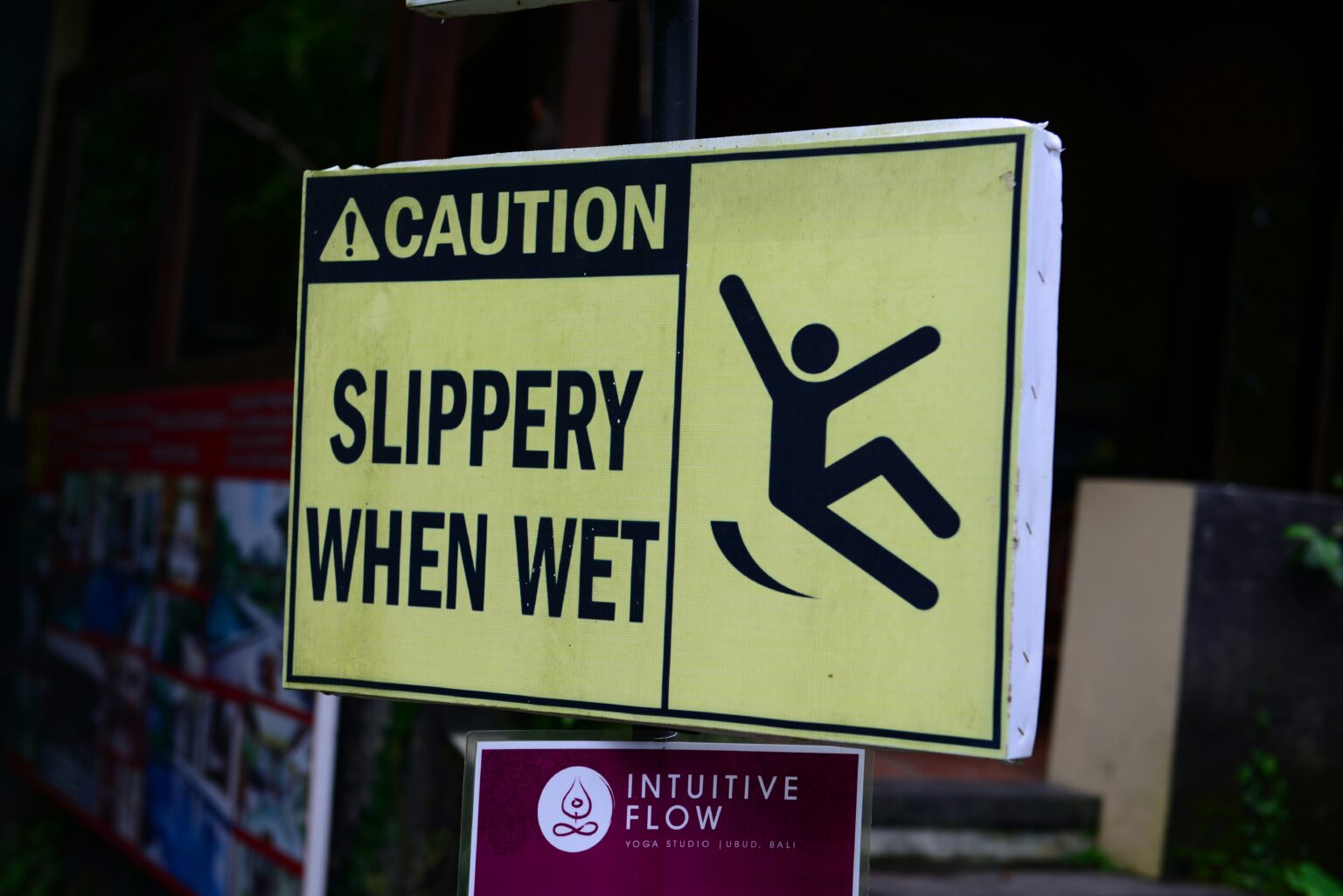
If you slip and fall in a Georgia store, the store may be responsible for your injuries if it knew, or should have known, about the hazard and you did not. Under O.C.G.A. § 51-3-1, businesses owe customers a duty of ordinary care to keep their premises and approaches safe. What the store manager probably won’t tell you is that the evidence you need, like surveillance video and inspection logs, is in the store’s hands and may not last long.
A wet floor with no cone, a broken step in a dim stairwell, or a pallet edge sticking into an aisle can cause broken wrists and hips, knee and shoulder injuries, concussions, and back injuries that linger. Soon after the fall, you may hear, “Our insurance company will call you.” Before that call, it helps to understand how Georgia premises liability law works.
Key Takeaways
- Georgia stores owe customers (invitees) ordinary care to keep the premises and approaches safe (O.C.G.A. § 51-3-1).
- Most Georgia slip-and-fall cases turn on “superior knowledge”: did the store know, or should it have known, about the hazard when you did not?
- Surveillance video and sweep logs are key evidence, and video can be overwritten quickly.
- Comparative fault applies, so your recovery is reduced by your share of fault and barred at 50% or more.
- Georgia’s two-year deadline (O.C.G.A. § 9-3-33) applies, but evidence can disappear in days.
Property Owners Owe Customers Ordinary Care
Under O.C.G.A. § 51-3-1, a business that invites the public onto its property owes those customers, called invitees, a duty of ordinary care to keep the premises and approaches safe. That generally includes reasonable inspections, cleanup routines, warnings, maintenance, and lighting.
Social guests and others on the property may have less protection, so your legal status matters. But if you were shopping, dining, or doing business, you were likely an invitee, which is the strongest protection Georgia premises law offers. Learn more on our premises liability page.
Superior Knowledge: the Heart of a Georgia Slip-and-Fall Case
Georgia slip-and-fall cases usually turn on knowledge. Did the owner know, or should it have known through reasonable inspection, about the hazard, while you did not?
- Actual knowledge: an employee saw the spill, created it, or ignored it.
- Constructive knowledge: the hazard was there long enough that a reasonable inspection routine should have found it. This is why sweep logs, inspection schedules, and how long a spill sat on the floor can become the center of the case.
The store’s defense is often the mirror image. It may argue the hazard was “open and obvious,” that you should have seen it, or that you were distracted. Georgia applies modified comparative fault under O.C.G.A. § 51-12-33: your recovery is reduced by your percentage of fault and barred if you are 50% or more at fault. That is one reason an insurer may want your recorded statement early.
Why Evidence Matters in the First Week
Surveillance video is often the most important evidence in a store fall case, and many systems overwrite footage within days or weeks. The video can show your fall and the hours before it, which may prove how long the hazard was there. The store generally isn’t required to hand it over voluntarily.
Georgia courts have held that a party’s duty to preserve evidence can arise once litigation is reasonably foreseeable. A prompt written preservation request from your lawyer puts the store on notice to keep the footage, sweep logs, and incident report. If you wait weeks, that evidence may already be gone.
What to Do After a Fall in a Store
- Report the fall to management right away and ask that an incident report be made. Get the manager’s name and ask how to get a copy.
- Photograph the hazard before it’s cleaned up: the spill, the lighting, any missing warning sign, your footwear, and your visible injuries.
- Get witness names and phone numbers. Other shoppers can leave within minutes.
- Get medical care the same day, even if you feel “just shaken up.” Gaps in treatment are often used against you.
- Don’t give a recorded statement, don’t guess at answers, and don’t sign anything from the store’s insurer. Our guide to common insurance lowball tactics explains why.
- Talk to a lawyer quickly so preservation requests go out before video is overwritten.
Common Georgia Premises Cases
- Grocery and big-box store spills and fallen merchandise
- Restaurant and gas station slick floors and broken curbs
- Apartment complex stairwells, railings, and lighting failures
- Hotel bathroom falls and pool-area hazards
- Negligent security claims involving assaults linked to broken gates, cameras, or lighting
Negligent security claims now follow special rules. Georgia’s 2025 tort reform law, SB 68, added O.C.G.A. § 51-3-50 and related sections, which apply to claims arising on or after April 21, 2025. Among other things, the new law may require proof of a particularized warning or prior substantially similar crimes, and it changes how fault can be shared with the person who committed the crime. These cases need careful review.
What Your Claim Can Cover
- Medical treatment, from the ER visit to future surgery
- Lost wages and diminished earning capacity
- Pain and suffering, including how the injury affects your work, hobbies, and daily life
- For fatal falls, wrongful death damages for the family
For more on how injuries are valued, see our guide to Georgia pain and suffering.
Frequently Asked Questions
Can I Sue a Store If I Slipped and Fell in Georgia?
Yes, if the store failed to use ordinary care and that failure caused your injuries. Generally, you need to show the store had actual or constructive knowledge of the hazard and that you did not. Evidence like video, sweep logs, and witness statements helps prove that.
What If the Store Says the Hazard Was Open and Obvious?
Stores often argue that a hazard was open and obvious or that you weren’t paying attention. Whether that defense works depends on the facts, such as lighting, distractions, product displays, and how visible the hazard really was. Even if you share some fault, you may still recover a reduced amount if you are less than 50% at fault.
How Long Do I Have to File a Slip-and-Fall Claim in Georgia?
Most Georgia personal injury claims must be filed within two years under O.C.G.A. § 9-3-33. If the fall happened on government property, much shorter notice deadlines may apply. See our guide to Georgia personal injury deadlines.
Should I Give the Store’s Insurer a Recorded Statement?
It’s usually wise to talk with a lawyer first. Statements like “I wasn’t looking” can be used to argue you were at fault. You can report the basic facts to the store without giving a recorded statement to its insurer.
If you were hurt in a fall at a Georgia store, The Gunn Law Group can help you understand your rights. Your consultation is free with no obligation, and there is no attorney fee unless we recover for you. Call 888-BIG-GUNN (888-244-4866). Hablamos español.