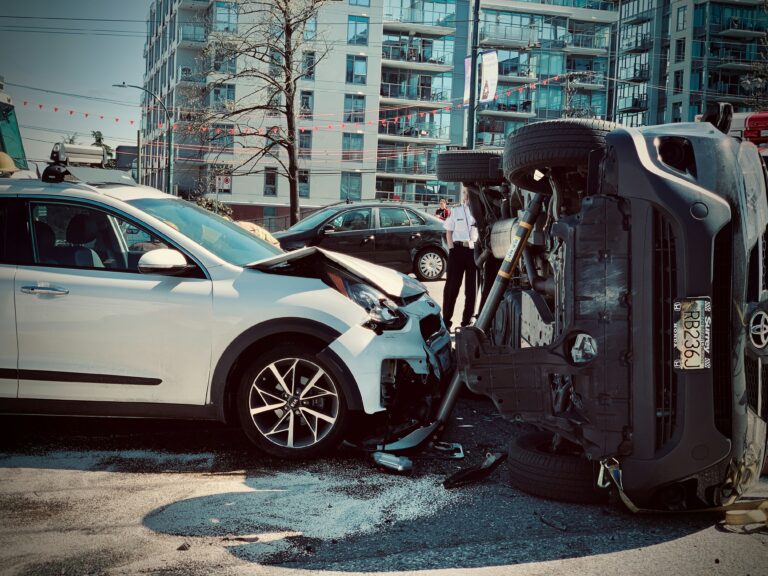
Uber and Lyft are part of daily life in Georgia, from Hartsfield-Jackson pickups to late nights in Midtown and Buckhead. When a rideshare trip ends in a crash, the claim is more complicated than a normal car wreck. There can be three or more insurance companies involved, and which one pays depends on who caused the crash and what the driver’s app was doing at the moment of impact.
The short answer: if the rideshare driver was on a trip or heading to pick someone up, Georgia law requires at least $1 million in liability coverage plus uninsured motorist coverage (O.C.G.A. § 33-1-24). If the driver was logged in but waiting for a request, lower limits apply. If the app was off, only the driver’s personal policy applies. If another driver caused the crash, that driver’s insurance pays first. This guide explains who is liable and how the coverage works.
Key Takeaways
- The rideshare driver’s app status at the moment of the crash decides which insurance tier applies.
- Once a ride is accepted, Georgia requires $1 million in liability coverage plus uninsured/underinsured motorist coverage.
- If another driver caused the crash, that driver’s insurer pays first, and UM coverage may add more.
- Screenshots of your trip and early requests to preserve app data can make a big difference.
- Most Georgia injury claims must be filed within two years (O.C.G.A. § 9-3-33).
Georgia’s Rideshare Insurance Tiers
| Driver’s status in the app | Minimum coverage required in Georgia |
|---|---|
| App off | The driver’s personal auto policy only |
| App on, waiting for a ride request | $50,000 per person and $100,000 per accident for injuries, plus $50,000 for property damage |
| Ride accepted, en route, or passenger on board | $1 million liability, plus uninsured/underinsured motorist coverage of at least $100,000 per person and $300,000 per accident |
Disputes often center on the “tier” question: was the app on, and had the driver accepted a trip? The app data answers it, which is why preserving it early matters. Our Georgia Uber and Lyft accident lawyers can send preservation requests for that data in the first days of a case.
Who Is Liable in a Georgia Rideshare Accident?
The Rideshare Driver
If the Uber or Lyft driver was speeding, distracted by the app, or tired after a long shift, the driver is at fault, and the tier in effect at the time decides which policy pays.
Another Driver
If another car caused the crash, that driver’s liability insurance pays first. If that driver is uninsured or underinsured, the rideshare policy’s UM coverage (during a trip) or your own uninsured motorist coverage may add more.
The Rideshare Company
Uber and Lyft classify drivers as independent contractors to limit their direct liability, but the insurance they must carry still applies. In some cases, the company’s own negligence, such as ignoring complaints about a dangerous driver, may be part of the claim.
Pedestrians and Cyclists Hit by a Rideshare Driver
If a rideshare driver hits someone on foot or on a bike, the same tiers decide which policy pays. See our pedestrian accident page for more on those claims.
Common Causes of Rideshare Crashes
- Distraction from the app, navigation, or ride requests
- Fatigue after long shifts
- Speeding to reach pickups or finish trips
- Unsafe stops and pickups in traffic lanes, especially at airports, stadiums and campuses
- Other drivers’ negligence
Airport curbs and event pickup zones put cars, pedestrians and luggage in a small space, so crashes there often involve more than one driver and more than one policy.
What to Do After a Rideshare Accident in Georgia
- Get medical care. Call 911 if anyone is hurt. Injuries often show up hours later.
- Call police and get the report number. Georgia requires reporting crashes with injury, death, or $500 or more in apparent property damage (O.C.G.A. § 40-6-273). Our guide to Georgia crash report codes explains how to read the report.
- Screenshot the trip: receipt, route, driver name and photo, vehicle, and time.
- Report the crash in the app, and keep a record of every message from the company.
- Gather evidence: photos of all vehicles and the scene, witness names, and the other driver’s insurance.
- Be careful with recorded statements. Talk to a lawyer before giving a recorded statement to the rideshare company’s insurer.
If You Were a Passenger
Paying passengers fall under the $1 million tier once a ride is accepted, and they are usually not at fault for a crash. The main questions tend to be which policies apply, in what order, and the full extent of your injuries. If both your driver and another driver share the blame, you may have claims against both.
What Compensation Can You Recover?
- Medical expenses, including future care
- Lost wages and reduced earning capacity
- Pain and suffering
- Property damage
- Wrongful death damages for families who lost a loved one (see our wrongful death page)
Georgia’s modified comparative fault rule applies: you can recover if you are less than 50% at fault, reduced by your share (O.C.G.A. § 51-12-33). Most claims must be filed within two years (O.C.G.A. § 9-3-33).
Frequently Asked Questions
Who Pays If My Uber or Lyft Driver Caused the Crash?
If the driver had accepted a ride or had a passenger on board, the rideshare policy’s $1 million liability coverage generally applies. If the driver was logged in and waiting, lower limits apply. If the app was off, the driver’s personal insurance applies.
Can I Sue Uber or Lyft Directly in Georgia?
The companies treat drivers as independent contractors, which limits direct claims against them. But the insurance they are required to carry still pays for injuries caused by their drivers during covered periods, and some cases involve the company’s own negligence.
What If Another Driver Hit My Uber or Lyft?
The at-fault driver’s insurance pays first. If that driver is uninsured or underinsured, the rideshare policy’s UM coverage during a trip, or your own UM coverage, can add more.
How Much Insurance Do Rideshare Drivers Need in Georgia?
Under O.C.G.A. § 33-1-24, a driver who is logged in and waiting must have at least $50,000 per person, $100,000 per accident, and $50,000 for property damage. Once a ride is accepted, at least $1 million in liability coverage plus UM coverage is required.
If you were hurt in an Uber or Lyft crash, you don’t have to sort out the insurance tiers on your own. The Gunn Law Group offers a free, no-obligation consultation, and you pay no attorney fee unless we recover for you. Hablamos español. Call 888-BIG-GUNN (888-244-4866) or request a free case review online.