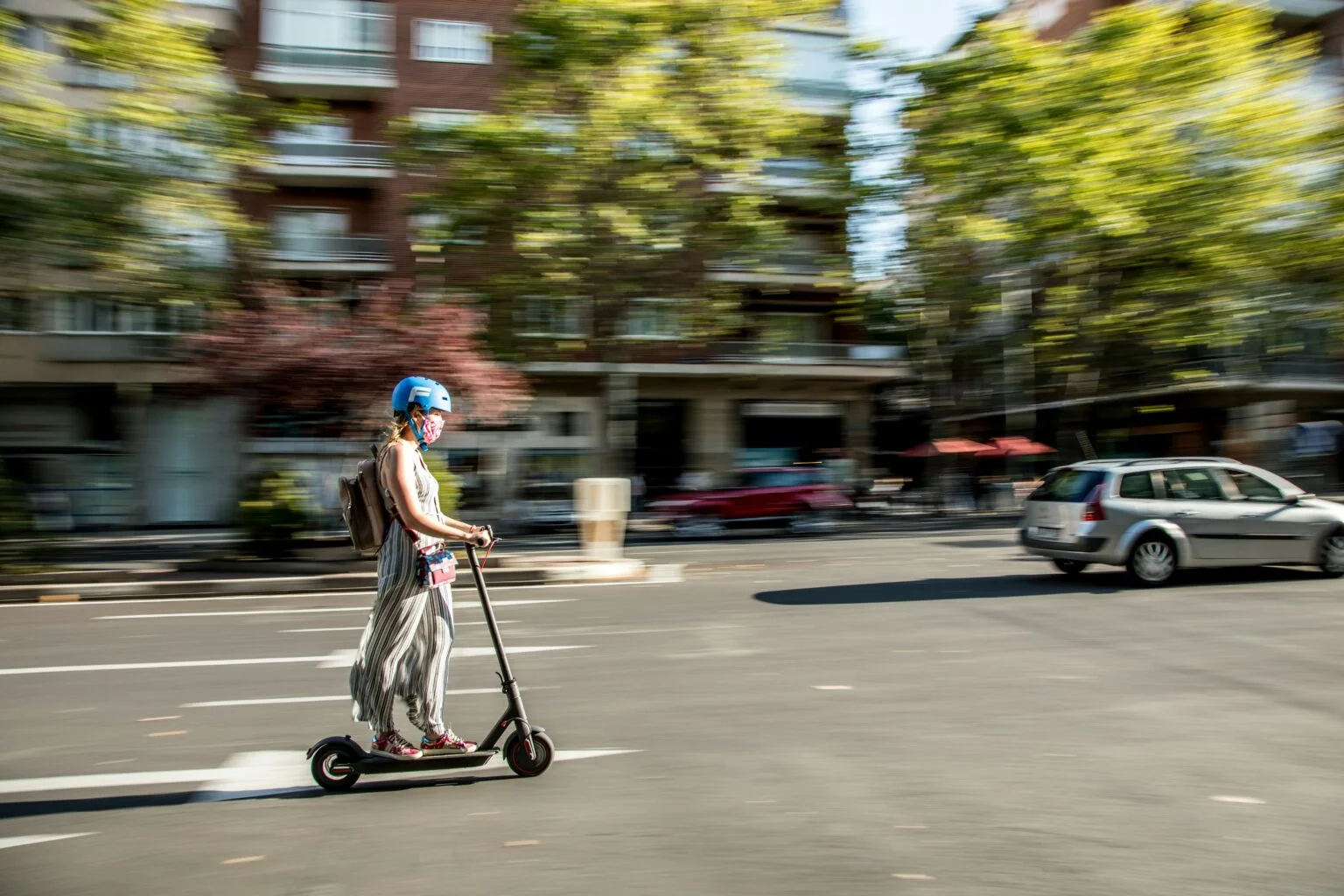
Scooters are on the BeltLine, in Midtown, around Georgia Tech and Georgia State, and outside every stadium on game day. E-scooters are everywhere in metro Atlanta, and the roads, and many drivers, haven’t caught up. When a car turns across a bike lane or a pothole throws a rider, the injuries are rarely minor: head injuries, broken wrists and collarbones, facial and dental trauma, and serious road rash.
The short answer: if a driver hit you while you were riding an e-scooter, the driver’s auto insurance is usually the first source of payment, and your own uninsured motorist coverage may add more. Scooter companies, property owners and government entities can share responsibility in some crashes. Breaking a scooter rule doesn’t automatically end your claim under Georgia’s comparative fault law, but it can reduce it. This guide covers the rules, who is responsible, and how to protect a claim, whether you were riding the scooter or were hit by one.
Key Takeaways
- The at-fault driver’s auto liability insurance is usually the first source of payment when a car hits a scooter rider.
- Your own uninsured/underinsured motorist coverage may apply even though you weren’t in your car.
- The City of Atlanta bans riding scooters on sidewalks, and shared scooters can’t be ridden from 2 a.m. to 4 a.m.
- A rider’s rule violation reduces, but doesn’t automatically bar, a claim unless the rider is 50% or more at fault.
- Claims involving a city pothole or road defect can require written notice within six months.
Georgia and Atlanta E-Scooter Rules
| Rule | What it means for riders |
|---|---|
| State law | Georgia law and local ordinances regulate where and how motorized scooters can be ridden, and riders are expected to follow traffic signals and rules of the road |
| Sidewalks in Atlanta | The City of Atlanta prohibits riding scooters on sidewalks; riders should use the street, bike lanes or bike paths |
| No-ride hours for rentals in Atlanta | Shared scooters and e-bikes can’t be ridden from 2 a.m. to 4 a.m. (shortened from midnight to 4 a.m. in late 2024) |
| Rental company terms | Lime, Bird and other operators set their own rider rules, including minimum age, one rider per scooter, and parking rules |
A rule violation by the rider does not automatically defeat a claim. Georgia uses modified comparative fault (O.C.G.A. § 51-12-33): you can recover if you are less than 50% at fault, reduced by your share. Adjusters may argue you were on the sidewalk, speeding or riding at night, so evidence of the driver’s own violation matters.
Who’s Liable in an E-Scooter Crash?
| What happened | Who may be responsible | Where the money may come from |
|---|---|---|
| Car turned across the bike lane (“right hook” or “left cross”) | The driver | Driver’s auto liability policy |
| Driver opened a door into your path (“dooring”) | The person who opened the door | Their auto policy |
| Rideshare or delivery car blocked the bike lane | The driver, possibly rideshare coverage if the app was on | Driver’s or commercial policy |
| Hit-and-run driver | Unknown driver | Your own uninsured motorist coverage |
| Pothole, broken pavement or construction hazard | City, county, state or a contractor | Government claim or contractor’s insurer, with short notice deadlines |
| Brake, throttle or stem failure | Scooter company or manufacturer | Product or maintenance claim, often subject to arbitration clauses in the rental terms |
| A scooter rider hit you while you were walking | The rider | Rider’s own insurance, if any |
The Insurance Wrinkles Riders Don’t Know About
- Your own auto policy may protect you on a scooter. Uninsured/underinsured motorist coverage often follows you as a person, not just your car, when a motor vehicle hits you. It is included in Georgia auto policies unless it was rejected in writing (O.C.G.A. § 33-7-11). Our uninsured motorist page explains how to check every policy in your household.
- Rental agreements are built to protect the company. The terms you tapped through often include arbitration clauses and liability waivers. They don’t block a claim against a negligent driver, but they shape any claim against the scooter company.
- Government claims have short deadlines. Claims against a Georgia city generally require written notice within six months (O.C.G.A. § 36-33-5); counties and the State require notice within 12 months. Miss them and the claim can be lost.
What to Do After an E-Scooter or E-Bike Crash
- Call 911 and get checked, even if you walked away. Concussions and dental and neck injuries often show up hours later. Georgia requires crashes with injuries to be reported (O.C.G.A. § 40-6-273).
- Photograph everything before it moves: the scooter and its ID number, the car, bike lane markings, the turn path, potholes, lighting and your injuries.
- Save the app data. Screenshot your ride receipt, route map, scooter ID and timestamps before they disappear.
- Get witnesses and cameras. Ask nearby businesses to save their video, since many systems record over footage quickly.
- Keep your gear unrepaired. Your helmet, shoes and clothing can show impact points.
- Report it carefully. Report through the app and to the venue or property manager if relevant, but don’t speculate about fault, and get advice before giving a recorded statement.
- Follow your treatment plan and track headaches, dizziness, jaw pain and missed work.
Crowds, Campuses and Game Days
Festival weekends, campus move-in and stadium traffic put scooters, pedestrians and rideshare pickups in the same few feet of pavement. Drivers must yield when turning across bike lanes and keep a proper lookout in crowded areas. Event organizers and property owners must keep walkways reasonably safe. When several parties contributed, more than one insurance policy may apply: auto, commercial, premises and your own UM.
Building a Scooter Injury Claim
Strong scooter claims start with preserving what disappears first: business and doorbell video, 911 audio, app and device data, and maintenance records. The next step is identifying every responsible party and every policy, and answering the “reckless rider” argument with evidence. Scooter claims share a lot with bicycle accident claims and pedestrian accident claims.
Most Georgia injury claims must be filed within two years (O.C.G.A. § 9-3-33).
Frequently Asked Questions
Who Pays If a Car Hits Me While I’m Riding an E-Scooter in Georgia?
Usually the driver’s auto liability insurance. If the driver has no insurance, too little, or flees, your own uninsured/underinsured motorist coverage may pay. Other parties, such as a property owner or the scooter company, may share responsibility depending on what caused the crash.
Can I Sue Lime or Bird After a Scooter Accident?
Possibly, if a defect or poor maintenance, such as brake or throttle failure, caused the crash. Rental agreements often include arbitration clauses and waivers, so these claims need careful review.
Is It Legal to Ride an E-Scooter on the Sidewalk in Atlanta?
No. The City of Atlanta prohibits riding scooters on sidewalks. Riders should use the street, bike lanes or bike paths. Shared scooters also can’t be ridden in Atlanta from 2 a.m. to 4 a.m.
What If I Was a Pedestrian Hit by Someone on a Scooter?
You may have a claim against the rider, and in some cases against the scooter company or a property owner. Collect the rider’s information and the scooter ID, photograph the scene, and get medical care right away.
If you were hurt in a scooter crash, you don’t have to deal with the insurance companies alone. The Gunn Law Group offers a free, no-obligation consultation, and you pay no attorney fee unless we recover for you. Hablamos español. Call 888-BIG-GUNN (888-244-4866) or request a free case review online.