Every August, metro Atlanta streets change overnight. School buses are back on their routes, crossing guards are at intersections, and children are walking, biking and waiting at bus stops, often before the sun is fully up. It only takes one distracted driver rolling through a school zone for a normal morning to become the worst day of a family’s life.
If your child was hurt by a driver in a school zone, at a bus stop or while crossing a neighborhood street, Georgia law gives your family real rights. Here is how these cases work, and the mistakes that can quietly shrink your child’s claim.
Key Takeaways
- Georgia drivers must stop for a school bus that is loading or unloading, in both directions, unless the road is divided by a median or barrier (O.C.G.A. § 40-6-163).
- Georgia does not judge a child by an adult’s standard of care. What counts as reasonable depends on the child’s own age and capacity.
- A child’s own injury claim generally gets extra time until after the child turns 18, but the parents’ claim for medical bills runs on the normal two-year clock.
- Bus, school and doorbell camera footage can be overwritten quickly, so preserving evidence early matters.
- Settlements for minors above $25,000 require court approval in Georgia (O.C.G.A. § 29-3-3).
Why School Zone Crashes Are a Back-to-School Risk
The start of the school year creates a predictable set of hazards around schools and bus stops.
- Drivers have spent the summer on different schedules and may not be scanning for kids early in the morning.
- Early start times mean children may be walking in low light, especially as fall goes on.
- Drop-off and pick-up lines create crowded curbsides with double parking, mid-block crossings and blocked sightlines.
- Phones are a constant distraction. According to NHTSA, sending or reading a text takes your eyes off the road for 5 seconds, which at 55 mph is like driving the length of a football field with your eyes closed.
The Laws Drivers Break Most Often Around Kids
Stopping for School Buses
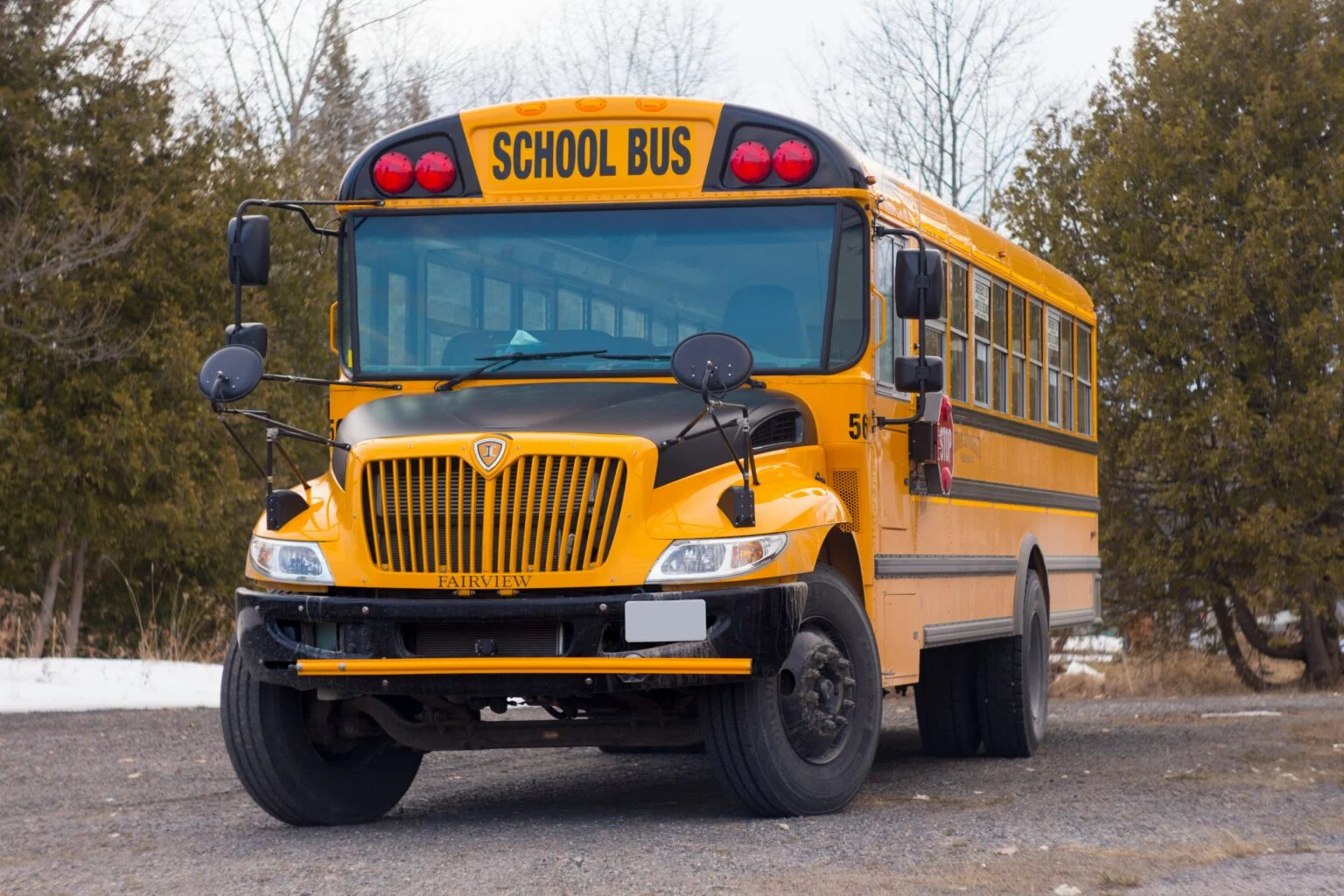
Under O.C.G.A. § 40-6-163, drivers must stop for a school bus that is loading or unloading with its stop arm out and red lights flashing. On most roads that means traffic in both directions. The main exception is a highway divided by a grass median, unpaved area or physical barrier, and it applies only to traffic on the other side. Georgia also allows school buses to carry stop-arm cameras, and violations captured on camera can lead to civil penalties.
School Zone Speed Limits
Reduced school zone speed limits apply during posted times, and some metro Atlanta communities use automated speed cameras in school zones. Camera tickets are civil penalties, but in an injury case, proof that a driver was speeding through an active school zone can be strong evidence of negligence.
Crosswalks and Crossing Guards
Drivers must yield to pedestrians in crosswalks and obey crossing guards. When a driver violates a safety statute and that violation causes the kind of harm the law was meant to prevent, Georgia law can treat the violation as negligence per se. Learn more about pedestrian accident claims.
“My Kid Darted Out”: Why That Defense Often Falls Short
One of the first things an insurance adjuster may suggest after a child pedestrian crash is that the child came out of nowhere. Georgia law does not treat children like small adults.
- Children are judged by their own capacity. Under O.C.G.A. § 51-1-5, due care for a child of tender years is the care that the child’s mental and physical capacities allow. Very young children may have little or no capacity to appreciate traffic danger at all.
- It is usually a question for a jury, not an adjuster. Whether a particular child acted reasonably for their age, experience and maturity is a fact question. An adjuster’s opinion that your child was at fault is not the final word.
- Drivers are expected to anticipate children. Near schools, parks and bus stops, a careful driver slows down, leaves more room and pays full attention, because children often act unpredictably.
Georgia uses modified comparative fault (O.C.G.A. § 51-12-33), so any share of blame an insurer assigns can reduce a claim. That is why an unfair “darted out” story should be challenged with evidence.
Deadlines: a Child’s Claim Works Differently
Georgia’s normal personal injury deadline is two years (O.C.G.A. § 9-3-33). When the injured person is a minor, O.C.G.A. § 9-3-90 generally gives the child the same amount of time after turning 18, which usually means until the child’s 20th birthday.
The trap: the claim for the child’s medical bills usually belongs to the parents, and that claim is not extended. It runs on the standard two-year clock. Families who wait can lose the medical-expense part of the case without realizing it. If a school district or other government body is involved, separate notice rules can apply. Read more about Georgia personal injury deadlines.
What to Do in the First 48 Hours
- Get your child fully evaluated. Kids often downplay symptoms, and concussion signs can appear days later.
- Photograph the scene: crosswalk markings, signs, flashing school zone beacons, sightlines and vehicle damage.
- Identify witnesses early, including crossing guards, other parents, bus drivers and school staff.
- Ask that video be preserved. School bus cameras, school building cameras and doorbell cameras may overwrite footage on short cycles. A preservation letter from a lawyer can help lock it down.
- Get a copy of the police report. Our guide to Georgia crash report codes explains how to read it.
- Do not give a recorded statement or accept a quick settlement. In Georgia, a minor’s settlement with a gross amount over $25,000 requires court approval, which is one safeguard against rushed, low offers.
What a Child Injury Claim Can Cover
- Emergency care, surgery, therapy and future medical needs as your child grows
- Pain and suffering, including missed sports seasons, activities and school
- Scarring and disfigurement
- Parents’ out-of-pocket costs and lost wages while caring for the child
For more on how noneconomic losses are evaluated, see our guide to Georgia pain and suffering.
Frequently Asked Questions
Do I Have to Stop for a School Bus on a Divided Highway in Georgia?
If you are on the opposite side of a highway divided by a grass median, unpaved area or physical barrier, Georgia law does not require you to stop. On a road without that kind of division, traffic in both directions must stop when the bus is loading or unloading with its stop arm out and lights flashing. Traffic behind the bus must always stop.
Can the Insurance Company Blame My Child for the Crash?
An insurer may try, but Georgia measures a child’s conduct by what that child’s age and capacity allow, not by an adult standard. Whether a child was at fault is usually a question of fact. Drivers are also expected to anticipate that children may behave unpredictably near schools and bus stops.
How Long Do We Have to File a Claim for a Child Hit by a Car?
The child’s own claim generally can be filed until two years after the child turns 18. The parents’ claim for medical expenses usually must be filed within two years of the crash. Government notice deadlines can be shorter, so it is wise to act early.
Does a Settlement for My Child Need Court Approval?
In Georgia, if the gross settlement of a minor’s claim is more than $25,000, court approval is required, and a conservator may need to be appointed depending on the net amount. Smaller settlements can be handled by the parent without court approval.
If a driver hurt your child in a school zone or at a bus stop, The Gunn Law Group offers a free, no-obligation consultation, and there is no attorney fee unless we recover for you. Hablamos español. Call 888-BIG-GUNN (888-244-4866) to talk about your family’s options.