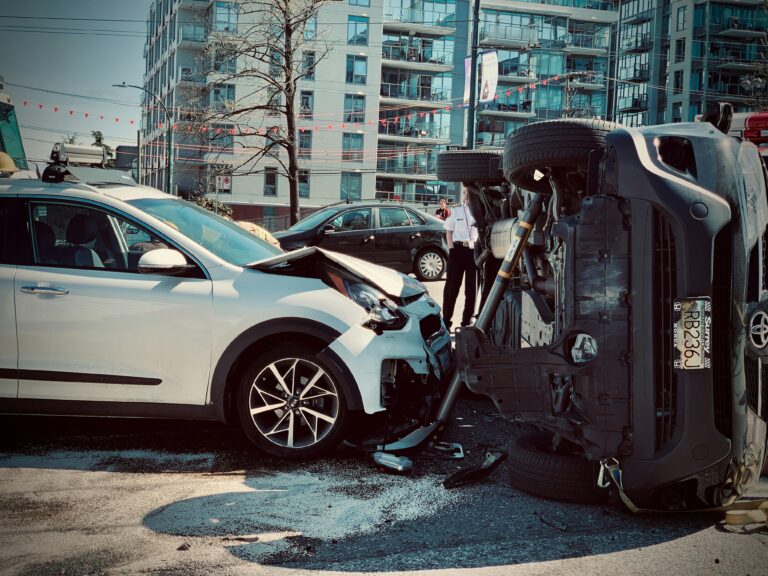

If you were rear-ended in Georgia, the driver who hit you is usually at fault. Georgia law says a driver may not follow another vehicle more closely than is reasonable and prudent (O.C.G.A. § 40-6-49), so a rear driver who can’t stop in time is typically found responsible. But fault isn’t automatic. It is decided on the evidence, and insurers use that opening to argue you stopped suddenly or share the blame.
Rear-end crashes are among the most common wrecks on I-285, I-75, I-85 and every stop-and-go corridor in metro Atlanta. Here’s how fault is decided, the arguments insurers make, and how to keep your claim from getting twisted.
Key Takeaways
- The rear driver is usually at fault because Georgia requires a reasonable and prudent following distance (O.C.G.A. § 40-6-49).
- Fault is still decided on the evidence, and Georgia courts generally treat rear-end liability as a question for the jury.
- Under Georgia’s comparative fault law, being found 50 percent or more at fault bars recovery, so insurers may push “you stopped suddenly” stories.
- Low property damage doesn’t mean low injury; whiplash and concussion symptoms can take days to show up.
- Photos, witnesses, video and consistent medical care are what answer the insurer’s arguments.
Why the Rear Driver Is Usually at Fault
- Following too closely. O.C.G.A. § 40-6-49 requires drivers to leave a reasonable and prudent distance, considering speed, traffic and road conditions. Sudden slowdowns are exactly what that space is for.
- Distraction. Many rear-end crashes involve a driver looking at a phone. Georgia’s hands-free law (O.C.G.A. § 40-6-241) bans holding a phone while driving, and phone records can help prove it.
- Speed for conditions. Rain, glare and heavy traffic require slower speeds and more distance.
Even so, the Supreme Court of Georgia has said a leading vehicle has no absolute legal position superior to the one following, and rear-end liability is generally a question for the jury. That’s why evidence matters even in a “clear” rear-end case.
The Defenses Insurers Use, and What Answers Them
| What the insurer says | What really matters | Evidence that answers it |
|---|---|---|
| “You stopped suddenly for no reason.” | The rear driver still had to leave room to stop | Witnesses, dashcam, traffic conditions, the reason you slowed |
| “Your brake lights were out.” | Can shift some fault, but rarely excuses the rear driver | Photos of working lights, repair records |
| “You cut in front of me.” | A true last-second cut-off can change the analysis | Damage angles, video, witness accounts of lane positions |
| “It was a sudden emergency.” | The emergency must not have been caused by the rear driver | Road conditions, timing, the rear driver’s speed and distance |
| “You weren’t wearing a seat belt.” | Since SB 68 (2025), seat-belt evidence may be admitted on fault and causation | Officer notes, medical records, vehicle inspection |
Georgia uses modified comparative fault (O.C.G.A. § 51-12-33). If an insurer can pin 50 percent of the blame on you, you recover nothing, and every percentage point below that reduces your award. That’s why insurers push these stories, and why early evidence matters so much.
Chain-Reaction Rear-End Crashes
In a multi-car crash, insurers argue about who started it, whether the middle car was pushed or hit first, and which policy pays for which impact. Damage patterns, witness statements and video usually decide it. Each driver who caused an impact can be responsible for the harm that impact caused, and when several people are hurt, the at-fault driver’s policy limits can run out, so identify every source of coverage early.
“Minor” Rear-End Crash, Real Injuries
Insurers often call rear-end crashes minor, arguing that low property damage means low injury. That isn’t how the body works. The sudden forward-and-back motion can cause whiplash, disc injuries, concussions and nerve symptoms even when the bumper looks fine. According to the Mayo Clinic, whiplash symptoms most often start within days of the injury, and the CDC notes that some concussion symptoms may not appear for hours or days.
Watch for:
- Neck pain and stiffness
- Upper and lower back pain
- Headaches, dizziness or trouble concentrating
- Numbness, tingling or weakness in the arms or hands
- Shoulder pain and trouble sleeping
If you notice radiating pain, numbness, weakness or severe headaches, get evaluated right away. See what a rear-end claim can really be worth.
Steps to Protect Your Rear-End Claim
- Call police and make sure the report shows the correct lanes and point of impact. Georgia requires reporting crashes that cause injury, death or apparent property damage of $500 or more (O.C.G.A. § 40-6-273).
- Photograph both vehicles and the road: damage, skid marks, traffic signals and your brake lights if you can.
- Get witness names and numbers. A neutral witness can confirm you were stopped or moving normally.
- Look for video fast: dashcams, businesses, buses and traffic cameras.
- See a doctor quickly and follow the plan. Gaps in treatment give insurers an easy argument that something else caused your pain.
- Be careful with recorded statements. Adjusters may try to get you to agree you “stopped suddenly.”
- Keep a symptom journal for the first few weeks: pain, sleep, missed work and what you can’t do.
- Don’t take a quick offer. Once you sign a release, the claim is usually over, even if you need more care later. Our guide to insurance lowball tactics explains why early offers tend to be low.
Frequently Asked Questions
Is the Rear Driver Always at Fault in a Georgia Rear-End Accident?
Usually, but not always. Georgia requires drivers to keep a reasonable and prudent following distance, so the rear driver is typically found at fault. Fault is still decided on the evidence, and a lead driver who cut in or reversed can share the blame.
Can I Be Partly at Fault If I Was Rear-Ended?
It’s possible if you stopped for no reason in traffic, cut in closely or had broken brake lights. Under Georgia’s comparative fault law, you can still recover if you are less than 50 percent at fault, reduced by your share.
Can I Get Compensation for Whiplash from a Minor Rear-End Crash?
Yes, if the crash caused it. Whiplash and other soft-tissue injuries are real injuries, even when vehicle damage looks small. Prompt, consistent medical care and clear documentation are what make these claims hold up.
How Long Do I Have to File a Rear-End Accident Claim in Georgia?
Most injury claims must be filed within two years of the crash under O.C.G.A. § 9-3-33. Shorter notice deadlines can apply if a government vehicle was involved. See our guide to Georgia personal injury deadlines.
If you were rear-ended and the insurer is trying to flip the blame, focus on your health and let us handle the fight. Our Georgia car accident lawyers serve clients from our Buckhead and Norcross offices, and hablamos español. Consultations are free and no-obligation, and there is no fee unless we win. Call 888-BIG-GUNN (888-244-4866).