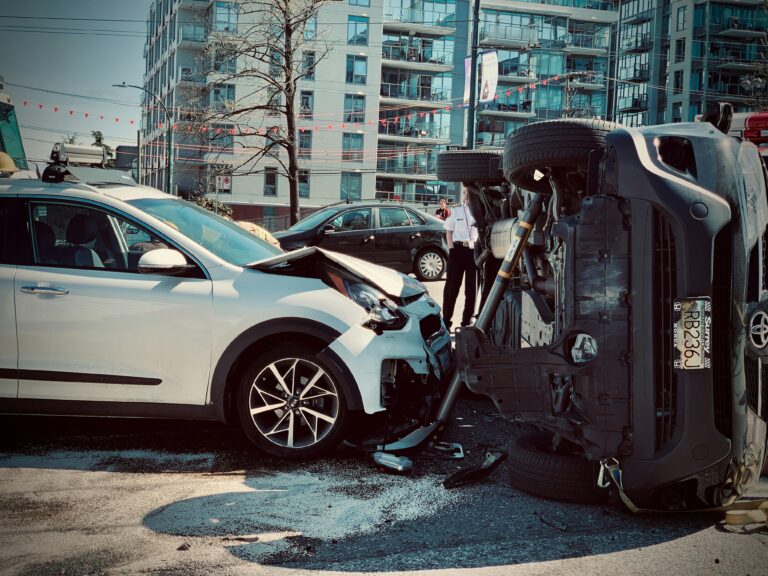
If you were hurt in a game day crash or parking-lot incident near a Georgia stadium, you can bring an injury claim against the driver who caused it, and sometimes against a lot owner or event operator whose unsafe conditions contributed. Heavy crowds and confusing traffic do not excuse careless driving. The steps you take in the first 24-48 hours can protect both your health and your claim.
College and pro game days pack Georgia’s roads with fans, rideshares, delivery drivers and out-of-towners who do not know the turns. Around Mercedes-Benz Stadium, Truist Park, Bobby Dodd Stadium and Athens on Saturdays, you will see sudden lane changes, last-second exits, gridlocked intersections and crowded crossings. Add dusk start times, rain and post-game celebrations, and crash risk climbs.
Key Takeaways
- Georgia is an at-fault state, and “I was following GPS” or “traffic was crazy” does not excuse unsafe driving.
- Rideshare and delivery crashes may involve several layers of insurance depending on app status.
- Lot owners and event operators may share responsibility for foreseeable hazards like poor lighting or missing traffic control.
- Stadium, business and doorbell cameras often overwrite footage within days, so ask for preservation right away.
- Most Georgia injury claims must be filed within two years (O.C.G.A. § 9-3-33).
Why Game Days Are Uniquely Risky
Stadium traffic disrupts normal patterns. Temporary police control, cones and blocked turns force unfamiliar routes. Fans follow GPS blindly and cut across lanes to reach their lots. Rideshare zones create stop-and-go pockets where drivers look at apps instead of the road.
After the game, fatigue, alcohol and the urge to beat the traffic lead to aggressive merges, tailgating and red-light running. Even at low speeds near the stadium, impacts can cause concussions, whiplash, shoulder and knee injuries and fractures. Pedestrians and scooter riders face special risk after dark, when drivers inch through crowds or turn right on red while watching for cars instead of people. If you were on foot, see our pedestrian accident page.
Fault Still Applies, Even in the Chaos
Every driver must drive safely for conditions: slowing in congestion and rain, leaving more following distance, yielding to pedestrians in crosswalks, using headlights at dusk and avoiding distraction. Speeding, unsafe lane changes and rolling through a crosswalk are still negligent on game day.
Under Georgia’s modified comparative fault rule, your recovery is reduced by your share of fault, and you cannot recover if you are 50% or more at fault (O.C.G.A. § 51-12-33). If a company vehicle or rideshare is involved, the employer’s or platform’s commercial coverage may apply depending on trip status. In limited cases, lot owners or event operators can share responsibility for foreseeable hazards, but those claims are fact-specific and time-sensitive.
Impaired driving is a real risk after tailgates. If a drunk driver hit you, our DUI accident page explains how those claims work. Georgia generally caps punitive damages at $250,000, but the cap does not apply when the at-fault driver was impaired by alcohol or drugs (O.C.G.A. § 51-12-5.1).
What to Do After a Game Day Crash or Parking-Lot Incident
- Call 911 and get checked out. Concussion and neck or back symptoms often appear hours later, and early records tie your injuries to the incident.
- Document the scene before it shifts. Photograph vehicle positions, damage, lane markings, cones, police-directed traffic patterns and blocked turns. In lots, capture lighting, surface hazards, wheel stops, curbs and sight lines.
- Note the context. Write down the event, start time, your route, the weather and the lighting.
- Collect witness information. Fans, vendors, attendants and officers often see the key moment. Get names and phone numbers.
- Ask for video. Stadiums, lots, nearby businesses and homes often have cameras. Request preservation right away and save your dash-cam files.
- Capture platform details. For rideshare, screenshot the trip screen with timestamps. For deliveries, photograph vehicle logos and ID numbers.
- Notify insurers carefully. Give the basics, avoid recorded statements and do not guess about speed or fault until you have spoken with a lawyer.
- Follow your treatment plan. Keep all appointments, therapy visits and receipts.
Parking-Lot and Pedestrian Injuries Near Stadiums
Lots and surrounding sidewalks are high-risk zones after dark. Georgia law requires property owners to use ordinary care to keep their premises and approaches safe for invitees (O.C.G.A. § 51-3-1). That can mean working lights, clear pedestrian routes, attention to trip hazards and traffic control when crowds predictably surge.
If you trip on a broken curb, slip on an oily surface or are struck in a poorly managed crossing, report the incident in writing, ask for an incident number and photograph the hazard before it is cleaned or the cones move. Keep your shoes and clothing. If the lot or sidewalk belongs to a city or county, written notice may be due within six or 12 months, far sooner than the usual two-year limit.
Rideshare, Delivery and Insurance Layers
Rideshare coverage depends on app status. Georgia law requires a rideshare company’s coverage to provide $1 million for death, injury and property damage during a prearranged ride, with lower limits while a driver is logged on and waiting (O.C.G.A. § 33-1-24). When the app is off, only the driver’s personal policy applies. Delivery drivers may have employer or platform coverage depending on their contracts. Our rideshare accident page explains more.
Your own coverage can help while fault is sorted out:
- MedPay, if you carry it, for immediate bills regardless of fault.
- Uninsured/underinsured motorist coverage if the at-fault driver has minimal insurance or flees.
- Health insurance for ongoing treatment.
A Georgia claim can include ER and follow-up care, imaging and therapy, future medical needs, lost wages or reduced earning capacity, pain and suffering, and repair or replacement of your vehicle and damaged items like car seats, glasses and phones.
Frequently Asked Questions
Who Is at Fault in a Crash in Stadium Traffic?
Usually the driver who failed to drive safely for conditions, such as by making an unsafe lane change, following too closely or failing to yield to pedestrians. More than one driver can share fault, and Georgia reduces your recovery by your percentage. Police-directed traffic patterns and photos of cones and signs can help show what happened.
Can the Stadium or Lot Owner Be Liable for My Injury?
Possibly. Property owners must use ordinary care to keep their premises and approaches safe, which can include lighting and traffic control in lots. These claims are fact-specific, and if a government entity owns the property, special notice deadlines may apply.
What If I Was Hit by a Rideshare Driver After the Game?
Georgia law requires rideshare companies to carry insurance that changes with the driver’s app status, from the driver’s personal policy with the app off up to $1 million during a ride. A screenshot of the trip and the other driver’s details help identify which policy applies.
How Long Do I Have to File a Claim?
Most Georgia personal injury claims must be filed within two years (O.C.G.A. § 9-3-33). See our guide to Georgia injury deadlines.
If a stadium trip turned into a tow truck and a stack of bills, The Gunn Law Group can review what happened in a free, no-obligation consultation. There is no attorney fee unless we win. Call 888-BIG-GUNN (888-244-4866). Hablamos español.