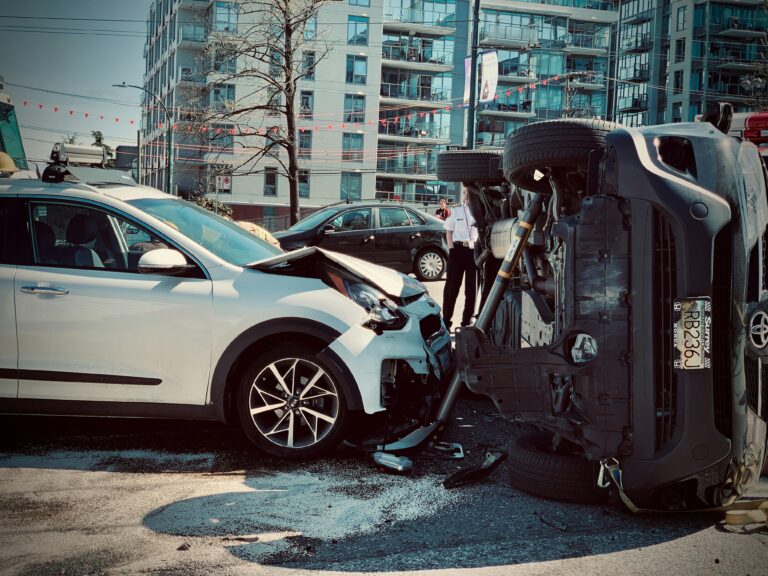

Atlanta crashes happen fast and in heavy traffic: a chain reaction on the Downtown Connector, a lane change on I-285, a rear-end at a GA 400 exit ramp. The minutes after a wreck are chaotic, and the choices you make that day and in the first week shape your health and your claim.
The short answer: check for injuries and call 911. If no one is seriously hurt and your car can move, Georgia law requires you to move it out of the travel lanes, and moving it doesn’t make you at fault. Report the crash, exchange information, photograph everything, and see a doctor the same day. Don’t give a recorded statement to the other driver’s insurer until you know your rights. This guide covers what to do at the scene, on the interstate, and over the next seven days.
Key Takeaways
- Call 911, check for injuries, and get the police report number before you leave the scene.
- If no one is seriously hurt and your car can be driven, move it out of the travel lanes (O.C.G.A. § 40-6-275). Moving does not make you at fault.
- Photos, witness names, and nearby camera locations are easiest to collect in the first minutes and days.
- Get medical care the same day and keep every follow-up appointment.
- Most Georgia injury claims must be filed within two years (O.C.G.A. § 9-3-33), but evidence can disappear in days.
At the Scene: Step by Step
- Check for injuries and call 911. Tell the dispatcher your exact location: interstate, direction, nearest exit or mile marker. If anyone is hurt, don’t move them unless they’re in danger.
- Steer it, clear it. If no one appears seriously hurt and the car can be driven safely, Georgia law requires you to move out of the travel lanes to the shoulder, exit, or a nearby lot. Under O.C.G.A. § 40-6-275, moving your car does not make you at fault. Snap a quick photo of the positions first if it’s safe.
- Report the crash. Georgia requires drivers to notify police immediately after any crash with injury, death, or $500 or more in damage (O.C.G.A. § 40-6-273). Inside Atlanta that is usually Atlanta Police; outside city limits it may be county police or the Georgia State Patrol. Get the report number.
- Exchange information. Names, phone numbers, insurance companies and policy numbers, license plates, and vehicle descriptions for every driver. Photograph their license and insurance card.
- Document everything. Photos and video of all vehicles, damage, skid marks, debris, traffic signals, lane markings, and weather. A wide shot showing the whole scene helps later.
- Find witnesses and cameras. Get names and numbers from anyone who saw it. Note businesses, gas stations, and traffic cameras nearby. Private video is often overwritten quickly.
- Don’t apologize or guess about fault. Stick to facts with the officer. “I’m sorry” and “I didn’t see them” can be quoted back to you later.
- Get medical care the same day. Adrenaline hides pain. Whiplash, concussions, and back injuries often show up 24 to 48 hours later.
Crashed on an Atlanta Interstate? What’s Different
Atlanta’s highways add risks you don’t face on surface streets: high speeds, heavy truck traffic, narrow shoulders, and secondary crashes when drivers slow to look.
- Get out of the lanes, or stay buckled in. If your car can’t move, turn on hazards and stay belted inside unless it is safer to get behind a barrier. Standing between cars on I-285 is one of the most dangerous places to be.
- Call for free HERO help. GDOT’s Highway Emergency Response Operators patrol metro Atlanta interstates and help clear crashes and stalled cars. Call 511 or use the 511GA app.
- Chain reactions are common. In a multi-car crash, photograph every vehicle and note who hit whom. Fault may be shared among several drivers, and each driver’s insurer may point at the others.
- Tractor-trailers raise the stakes. If a commercial truck was involved, trucking companies often send response teams quickly. Talk to our Georgia truck accident lawyers before you talk to them.
Your First-Week Checklist
| When | What to do | Why it matters |
|---|---|---|
| Day 1 | Get medical care, get the report number, save photos | Early records tie your injuries to the crash |
| Day 2 | Start an “Accident” folder: photos, receipts, tow and rental bills, medical paperwork | Missing paperwork makes losses harder to prove |
| Day 3 | Report the crash to your own insurer. Decline recorded statements to the other driver’s insurer | Early statements can be used to question fault and injuries |
| Day 4 | Follow up with your doctor and keep every appointment | Gaps in treatment give adjusters a reason to question your injuries |
| Day 5 | Stay off social media about the crash or your activities | Insurers may screenshot posts that look “fine” |
| Day 6 | Don’t accept a quick offer or sign a release | A release usually ends your claim for good |
| Day 7 | Get the police report and talk to a lawyer | Evidence is still fresh and deadlines are still far off |
Want this in a printable format? Download our free After the Wreck guide, written by attorney Harrell Gunn.
Common Mistakes After an Atlanta Wreck
- Leaving the scene without a report or photos, even for a “fender bender”
- Waiting days to see a doctor, then trying to catch up
- Giving a recorded statement to the other driver’s insurer the first week
- Posting about the crash, or about workouts and nights out while you’re claiming injury
- Cashing a quick check before you know your diagnosis and treatment plan
When to Call a Lawyer
Call a lawyer if you were hurt, if fault is disputed, if a commercial vehicle or rideshare was involved, or if an adjuster is pushing you to settle. Most Georgia injury claims must be filed within two years of the crash (O.C.G.A. § 9-3-33), but evidence disappears in days. Our Atlanta car accident lawyers work from our Buckhead office, and our Norcross office serves Gwinnett County.
Frequently Asked Questions
Do I Have to Call the Police After a Minor Car Accident in Atlanta?
If anyone is hurt or damage looks like $500 or more, Georgia law requires you to notify police immediately (O.C.G.A. § 40-6-273). Because many repairs cost more than $500, calling 911 is the safest choice.
Should I Move My Car After an Accident on the Interstate?
Yes, if no one appears seriously hurt and the car can be driven safely. O.C.G.A. § 40-6-275 requires drivers to move out of the travel lanes, and moving your car does not make you at fault.
How Long Do I Have to File a Car Accident Claim in Georgia?
Most injury claims must be filed within two years of the crash under O.C.G.A. § 9-3-33. Claims for vehicle damage generally have four years, but insurance policies can require much faster notice.
What If the Driver Who Hit Me in Atlanta Has No Insurance?
Your own uninsured/underinsured motorist coverage can pay for your injuries. Georgia policies include UM coverage unless it was rejected in writing, so check your declarations page. Our guide to Georgia UM coverage explains how these claims work.
If you were hurt in an Atlanta crash, you don’t have to handle the insurers alone. The Gunn Law Group offers a free, no-obligation consultation, and you pay no attorney fee unless we win. Call 888-BIG-GUNN (888-244-4866). Hablamos español.