
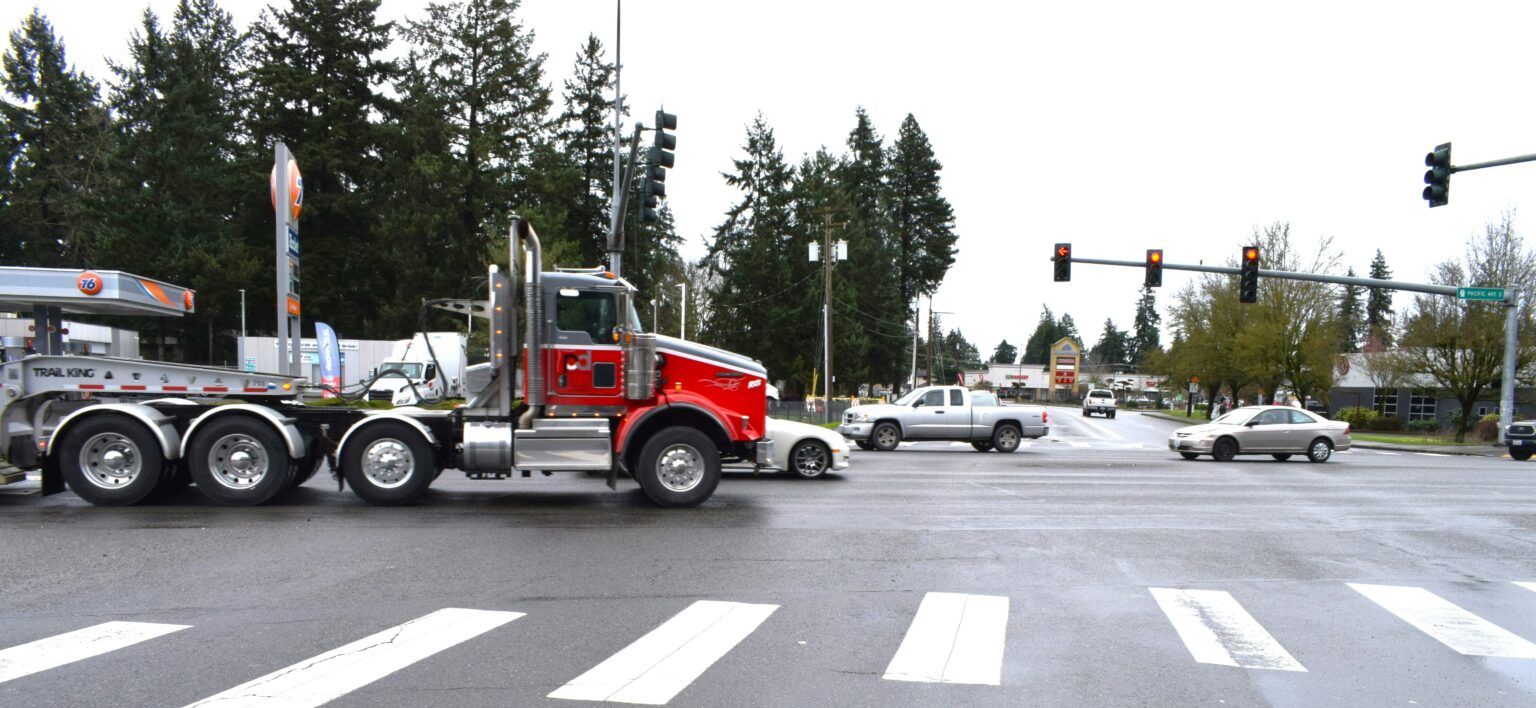
Truck accident cases in Atlanta are different from ordinary car wreck claims in three big ways: federal safety rules apply to the driver and the company, more than one party may share responsibility, and key evidence may be kept for only months. A fully loaded tractor-trailer can weigh up to 80,000 pounds on the interstate, many times the weight of a passenger car, so the injuries are often severe.
If you were hit by a commercial truck on I-75, I-85, I-20, I-285 or a local road, here is what makes these cases different and what to do early to protect your claim.
Key Takeaways
- Trucks and carriers must follow the Federal Motor Carrier Safety Regulations, and Georgia applies most of those rules to trucks that operate only in-state.
- Hours-of-service, drug and alcohol, maintenance and driver qualification rules can all become evidence of negligence.
- The driver, the motor carrier, and sometimes a loader, maintenance vendor or broker may share responsibility.
- Many required records, including ELD logs, only have to be kept for months, so a preservation letter should go out quickly.
- Most Georgia injury claims must be filed within two years (O.C.G.A. § 9-3-33).
Federal Safety Rules That Do Not Apply to Cars
The Federal Motor Carrier Safety Administration sets rules for commercial vehicles, generally those of 10,001 pounds or more used in interstate commerce. The Georgia Department of Public Safety has adopted most of these rules for intrastate carriers too. A violation does not automatically decide fault, but it can be important evidence.
Hours of Service
Property-carrying drivers may drive up to 11 hours after 10 consecutive hours off duty, may not drive beyond the 14th hour after coming on duty, and must take a 30-minute break after 8 cumulative hours of driving. Weekly limits of 60 or 70 hours also apply. Separately, a driver may not drive while too fatigued to drive safely, even within the hour limits.
Electronic Logging Devices
Most carriers must use electronic logging devices (ELDs) to record drivers’ duty status. ELD data is often compared with dispatch records, fuel receipts and fleet messages, and mismatches can reveal hours that were not logged. Carriers must keep these records for at least 6 months (49 C.F.R. § 395.8(k)).
Drug and Alcohol Rules
Commercial drivers may not be on duty with an alcohol concentration of 0.04 or higher, and carriers must test drivers after certain crashes, including any crash involving a death.
Maintenance and Inspection
Carriers must systematically inspect, repair and maintain their vehicles and keep records. Brake, tire and lighting failures can point to a maintenance problem.
Driver Qualification
Carriers must keep a driver qualification file with the driver’s application, driving records, road test and medical certificate. Gaps in these records can support claims of negligent hiring, retention or supervision.
Who Can Be Responsible in a Truck Crash
Unlike many car accidents with one driver and one policy, a truck crash may involve several parties:
- The driver, for unsafe driving, fatigue or rule violations
- The motor carrier, which is generally responsible for an employee driver’s negligence in the course of employment under Georgia’s respondeat superior rule (O.C.G.A. § 51-2-2), and may also be responsible for its own hiring, training and scheduling decisions
- The company that loaded the cargo, if an improperly secured or overloaded load contributed to the crash
- A maintenance vendor, if faulty repairs played a role
- A freight broker, in some situations, depending on its role in choosing the carrier
Federal rules require interstate carriers hauling general freight to carry at least $750,000 in liability coverage, with higher minimums for certain hazardous materials (49 C.F.R. § 387.9). For crashes on or after July 1, 2024, Georgia generally allows a motor carrier’s insurer to be named directly in a lawsuit only in limited situations, such as when the carrier is insolvent or cannot be served (O.C.G.A. §§ 40-1-112 and 40-2-140).
The Evidence Problem
Trucking companies and their insurers may send investigators to the scene quickly after a serious crash. Meanwhile, much of the most important evidence has limited retention periods:
| Record | Minimum retention |
|---|---|
| ELD logs and supporting documents | 6 months |
| Driver vehicle inspection reports | 3 months |
| Periodic (annual) inspection reports | 14 months |
| Driver qualification file | Length of employment plus 3 years |
Dash camera video and engine control module data are not covered by these federal retention rules and may be overwritten on the company’s own schedule. In Phillips v. Harmon (2015), the Georgia Supreme Court held that a duty to preserve evidence can arise when litigation is reasonably foreseeable. A prompt preservation (spoliation) letter puts the carrier on clear notice of what must be kept, including the truck itself.
Georgia Law That Shapes Truck Cases
- Comparative fault. Your recovery is reduced by your share of fault and barred at 50% or more (O.C.G.A. § 51-12-33).
- Punitive damages. Where there is clear and convincing evidence of willful misconduct or conscious indifference, such as knowingly putting a dangerous driver on the road, punitive damages may be available. They are generally capped at $250,000, with exceptions including impaired driving (O.C.G.A. § 51-12-5.1).
- 2025 tort reform. SB 68 allows seat belt evidence to be admitted in many cases and lets any party ask for fault and damages to be tried separately.
For more on truck claims, see our truck accident practice and Atlanta truck accident pages.
What to Do After a Truck Accident
- Get medical care right away, and follow your treatment plan.
- Photograph the truck, trailer, DOT and company markings, the scene and your injuries.
- Get the police report. Our guide to Georgia crash report codes explains how to read it.
- Get witness names and contact information.
- Do not give a recorded statement to the trucking company’s insurer before getting advice.
- Talk to a lawyer early so preservation letters can go out before records are discarded.
Frequently Asked Questions
How Long Does a Trucking Company Have to Keep ELD Data?
Federal rules require carriers to keep ELD records and supporting documents for at least 6 months (49 C.F.R. § 395.8(k)). After that, they may be discarded unless the company has a duty to preserve them, which is why preservation letters should go out quickly.
Does an Hours-of-Service Violation Automatically Make the Company Liable?
No. A violation does not by itself prove it caused the crash. But it can be strong evidence of fatigue or unsafe practices and can support claims about how the company scheduled or supervised its drivers.
How Much Insurance Does a Commercial Truck Have to Carry?
For interstate carriers hauling general freight, the federal minimum is $750,000. It rises to $1,000,000 for oil and certain hazardous materials and $5,000,000 for certain higher-risk hazardous materials in bulk. Some carriers carry more, and intrastate carriers follow Georgia’s requirements.
Can I Sue the Trucking Company’s Insurer Directly in Georgia?
For crashes on or after July 1, 2024, generally not. Georgia now allows the motor carrier’s insurer to be joined only in limited situations, such as when the carrier is insolvent or bankrupt or cannot be served after reasonable diligence.
If you or someone you love was hurt in a truck crash in Atlanta or anywhere in Georgia, The Gunn Law Group offers a free, no-obligation consultation, and there is no attorney fee unless we recover for you. Hablamos español. Call 888-BIG-GUNN (888-244-4866) before key records disappear.